To make C6 the “five-a-side” of cricket.
Why C6 Cricket Development exists: to see C6 played across the UK cricketing pyramid — from a young person’s first game at school through community and club cricket to high-level C6 competition.
What we believe: cricket should be easier to start without becoming less like cricket.
The Problem
Cricket can feel complex, slow or hard to access
To many people, cricket can feel complex, time-consuming, slow or difficult to understand. This often limits junior access to a positive cricket experience.
State schools may struggle because of limited time, staffing constraints or lack of confidence in delivering cricket. Clubs can also struggle to attract new junior players, especially where cricket feels too performance-led or dependent on parental knowledge of the game.
C6 answers this with one recognisable game for different ages, abilities and settings — accessibility and competitiveness designed to coexist.
Our Mission
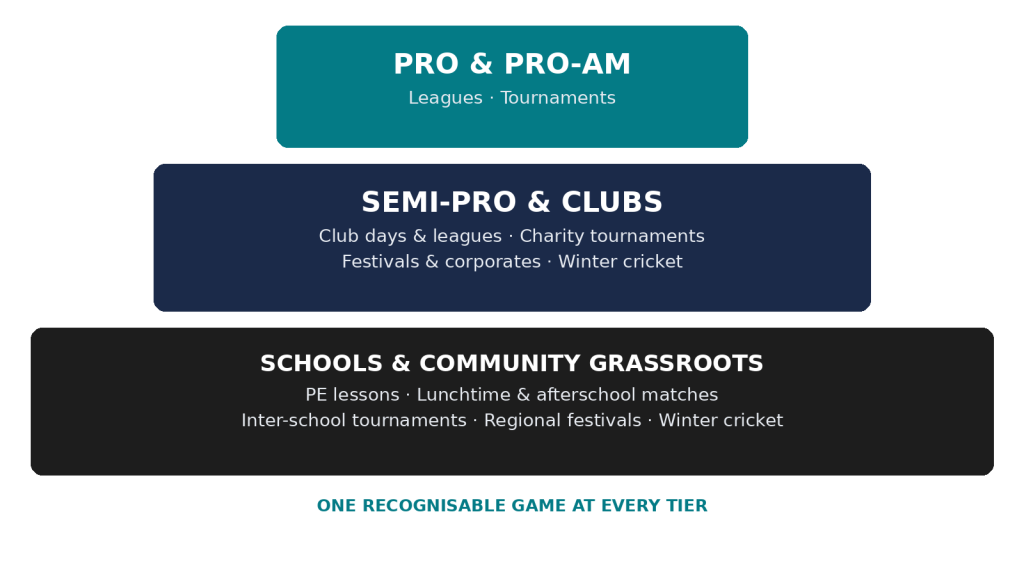
One game across the cricketing pyramid.
Our long-term ambition: a recognised C6 participation and competition ecosystem that complements the wider game — from PE lessons to high-level C6 competition.
Key Characteristics
What makes C6 Cricket different
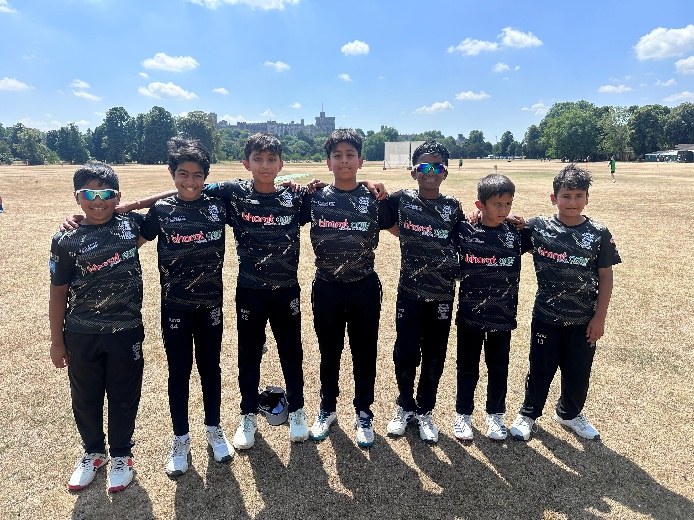
Real Cricket
Batting, bowling, wickets, fielding, innings and tactics — recognisably cricket at every level.
Simple to Start
Six players, 30 balls, simple setup. You learn the game by playing it.
Everyone Matters
Small teams and rotated roles keep every player in the game.
One Game Everywhere
The same C6 in a PE lesson, a club night and a competitive fixture.
Fast & Predictable
30-ball innings fit PE timetables, festivals and spectators.
Competitive by Design
Wickets, tactics and real consequences preserve cricket authenticity.
Schools Commitment
The lesson is the game.
Meaningful cricket can begin through play: teachers learn how to run the game; pupils learn cricket by playing it.
- Set up
- Manage
- Score
- Umpire
- Then play
Talk to Us About C6 Cricket Development
Want to bring C6 Cricket to your school, club or community organisation? We’d love to hear from you.